The rising cost of living to K1 million per month for an average urban family in Malawi has left households across towns and cities scrambling to cover basic needs as inflation, higher taxes and stagnant wages squeeze purchasing power.
A recent Basket Needs Assessment by the Centre for Social Concern (CfSC) delivered the stark verdict of the increase in urban cost of living to K1 million, narrowing daily life for many to a bare struggle for survival.
CfSC data shows that the national average cost of living doubled from K491 037 in January 2024 to K1 072 809 as of January 2026.
Market vendors, cleaners and small‑scale traders describe a relentless cycle of earning just enough to get by.
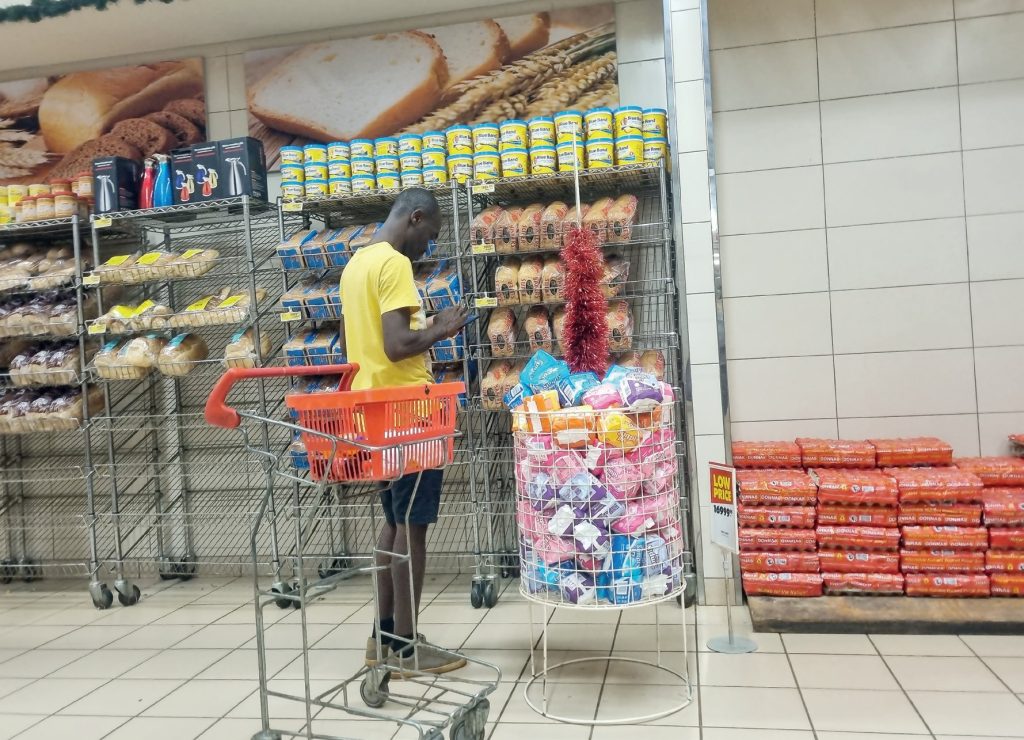
“Life is about daily struggle. I usually make a profit of between K15 000 to K20 000 from my daily banana sales of banana. When I calculate transport to and from my business place, I usually end up with nothing to save. It’s hand to mouth because I look after four children and our daily expenses are estimated at K15 000. It is hard to survive,” said Maria Fote, a breadwinner and mother from Kauma, but plies her trade at City Centre in Lilongwe.
Emily Chinjikani, a mobile money agent, echoes that despair.
“My monthly income is K100 000. I support a family of six. With prices where they are, I can hardly survive. We are living by God’s grace,” she says.
Cleaners such as Joseph Jere and Rhoda Makwana, both earning the current minimum wage of K126 000, their pay barely covers essentials.
Makwana, who heads a household of four in Blantyre, says the family can afford little more than a bag of maize and rent. “If the minimum wage is revised, I would expect it to more than double. Otherwise our lives will only be about survival,” she says.
For Jere, the ceiling for employers of her calibre is just to hit the minimum wage which is K126 000.
“What we get is merely for survival because it does not match the cost of living. We are struggling,” he said.
According to data from the National Statistical Office, Malawi’s annual inflation rate rose to a record high in 2024, hitting 34 percent driven by higher prices of food, electricity, water and transport.
By January 2026 the rate had eased to 24.6 percent, but ordinary households still face sharply higher prices.
The Malawi Energy Regulatory Authority (Mera) raised petrol and diesel pump prices by nearly 41 percent, taking petrol to K4 965 per litre from K3 499, and diesel to K4 945 from K3 500. This followed an earlier 33 percent increase five months prior. The hikes have pushed up transport fares and the cost of goods across the economy.
Electricity costs rose again after the Electricity Supply Corporation of Malawi (Escom) implemented the third phase of a four‑year tariff adjustment, increasing bills by 12 percent amid performance shortfalls. This has had a ripple effect on transport costs, with public service vehicles increasing fares, further squeezing household budgets.
On the fiscal side, the Value Added Tax (VAT) Amendment of 2025 raised VAT from 16.5 percent to 17.5 percent, adding to production costs that businesses have passed on to consumers.
Pay As You Earn adjustments have not kept pace with rising living costs, leaving many workers worse off in real terms.
CfSC economic governance officer Agness Nyirongo said high food prices are closely linked to the rising cost of agricultural inputs, adding that the situation has been worsened by the increase in VAT rate from 16.5 percent to 17.5 percent, which has raised the cost of goods and services across the economy.
She said social protection initiatives such as Social Cash Transfer have not helped in easing the suffering of people, especially in urban areas where cost of living is very high.
“There is a need for minimum wage to be reviewed. If you look at the cost of living and the minimum wage now, there is a big gap which needs to be filled. With the current minimum wage, workers are struggling to survive,” said Nyirongo.
The minimum wage in Malawi is still insufficient to allow an employee to live a respectable life because it only accounts for around half of the living wage.
This is evidenced by the average national survival minimum expenditure basket (Smeb) cost of January 2026 which stands at K232 200 as of January 2026.
Monitored by World Food Programme (WFP) Malawi since April 2020, the Smeb represents the minimum cost required to meet basic food and non-food needs through market purchases over a period of a month.
The food commodities used in calculating the expenditure are those that make up a traditional rural and urban diet
The figures are against the minimum wage, currently at K126 000 per month for employees in formal employment and K72 800 for domestic workers.
Meanwhile, Malawi Congress of Trade Union is pushing for a 95 percent minimum wage review to carter for the current cost of living.
MCTU president Charles Kumchenga said the proposal was presented at a tripartite meeting that was held earlier this month.
He said the review is necessary in view of the recent economic developments that include increases in VAT and fuel prices.
“We demanded 100 percent minimum wage increment bearing in mind that commodity prices have gone up. In our discussion, we were requested by the government to reach a level at which all parties would agree. We decided to settle for 95 percent in view of the current economic situation,” said Kumchenga.
With this proposition, minimum wage would fall at around K24 000, about K13 000 higher than Smeb.
The proposition, however, has been met with opposition from the Employers Consultative Committee with executive director George Khaki saying they would be comfortable with 25 percent review of minimum wage.
With this proposition, minimum wage would increase to K157 000 per month.
Meanwhile, Minister of Labour Joel Chigona said minimum wage would be reviewed, but a consensus figure would be announced in the forthcoming budget statement
The cost of food, housing and utilities were the main determinants of the high cost of living for households out of the fundamental elements that make up the minimum wage basket.
Households from lower income categories in cities are particularly impacted by the high cost of living caused by inflation, which also has an impact on the food supply.